B2B Trade Show Video: What to Shoot and Why
Video at B2B trade shows is widely discussed and widely misused. Most exhibitors either ignore it completely or treat it as decoration, running looped product reels on a screen that nobody watches. The exhibitors who get real value from video at trade shows treat it as a content production opportunity, not a display medium. They leave with assets that keep working for weeks after the show floor closes.
Key Takeaways
- Trade shows are one of the most cost-efficient environments to capture video content at scale, because your customers, prospects, and competitors are all in one place for two days.
- The most valuable trade show video is rarely the polished brand reel. It is the unscripted customer conversation filmed in a quiet corner of the booth.
- Video captured at a show has a long shelf life. A strong customer testimonial filmed in February can anchor a campaign running in September.
- Most exhibitors plan their booth and then think about video. The ones who plan their video first tend to build better booths.
- Without a clear brief before the show, your video team will default to filming the wrong things. Preparation is not optional.
In This Article
- Why Trade Shows Are Underrated as Video Production Environments
- The Four Types of Video Worth Capturing at a Trade Show
- Customer Testimonials Filmed on the Floor
- Expert and Executive Interviews
- Product Demonstrations on Camera
- Short Social Assets Captured in Real Time
- How to Brief a Trade Show Videographer
- Where Trade Show Video Fits in the Wider Funnel
- The Booth Design and Video Connection
- Virtual and Hybrid Shows Change the Video Equation
- Distributing Trade Show Video After the Event
I have been in and around trade show marketing for most of my career, from running booths as a junior marketer to advising enterprise clients on their event strategy as an agency CEO. The pattern I see most often is exhibitors spending serious money on floor space and stand design, then treating video as an afterthought. That is a costly mistake, and it is almost entirely avoidable.
Why Trade Shows Are Underrated as Video Production Environments
Think about what a trade show actually gives you. Your best customers are present. Senior prospects are walking the floor with genuine buying intent. Your own subject matter experts are on-site and prepared to talk. Industry journalists and analysts are there. Competitors are showing their hand. For two days, your entire market is concentrated in one building.
That concentration of people and intent is extraordinarily hard to replicate outside of a live event. Yet most exhibitors walk away with nothing more than a few phone photos and a stack of business cards.
The brands that treat a trade show as a content production sprint leave with material that can fuel months of marketing. Customer testimonials. Expert interviews. Product demonstrations filmed in front of a real audience. Reaction clips. Behind-the-scenes content. Short social assets. All of it captured in two days, in an environment where people are already in the mindset to talk about your category.
If you are thinking about how video fits into your broader acquisition strategy, our video marketing hub covers the full picture, from platform selection to content planning to measurement.
The challenge is that capturing good video at a trade show requires planning that most exhibitors do not do. You cannot just point a camera at your booth and hope for the best. You need a brief, a shot list, a person responsible for capturing content, and a clear sense of what you are going to do with the footage afterwards.
The Four Types of Video Worth Capturing at a Trade Show
Not all trade show video is created equal. Before you brief a videographer or assign someone from your team to capture content, it helps to be clear about which formats will actually serve your marketing objectives. In my experience, there are four categories worth prioritising.
Customer Testimonials Filmed on the Floor
This is the highest-value category and the most commonly missed opportunity. When a customer comes to your booth and says something positive about your product or service, that is a testimonial waiting to happen. Most exhibitors let those moments pass. The ones who capture them walk away with content that no amount of studio budget can replicate, because it is authentic, specific, and comes from a real person in a real context.
The logistics are straightforward. Identify a quiet corner of your booth in advance. Brief your team to flag any customer who says something worth capturing. Have a simple release form ready on a tablet. Keep the filming short, two to three minutes maximum. Ask one or two open questions rather than scripting the customer. The less it feels like a formal shoot, the better the content tends to be.
Wistia has done useful work on what makes B2B product video credible, and their examples of B2B product video consistently point to specificity and authenticity as the two variables that matter most. A customer saying “it cut our onboarding time by three weeks” is worth more than a polished brand statement about innovation.
Expert and Executive Interviews
Trade shows concentrate expertise. Your own senior people are on-site and prepared. Industry speakers are accessible. Customers with deep category knowledge are walking the floor. A 10-minute interview with your CTO or a respected customer can produce three or four short clips that work across LinkedIn, your website, and email nurture sequences for months.
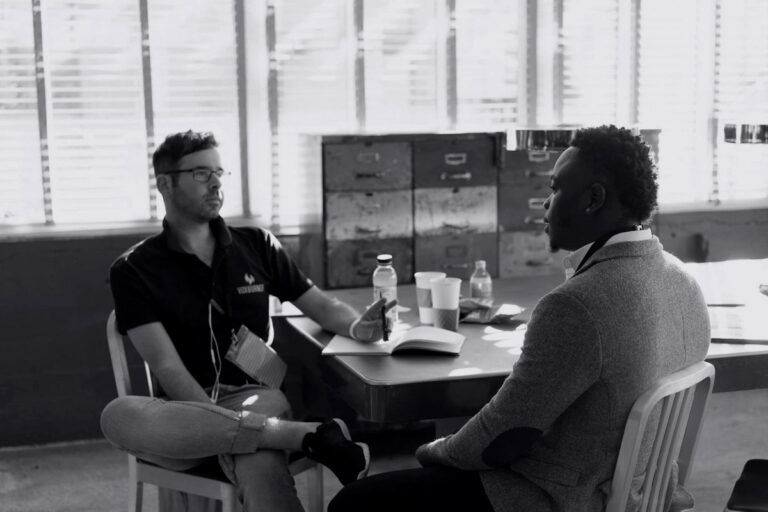
The format matters here. A formal sit-down interview with a branded backdrop works for some audiences. A more conversational piece filmed at the booth, with show floor noise in the background, can feel more immediate and credible for others. The right choice depends on your audience and how you plan to distribute the content. That decision should be made before the show, not during it.
I learned this the hard way early in my career. We had a brilliant client-side engineer at a show who was genuinely compelling on camera. We filmed him for 20 minutes without a proper brief. The footage was technically fine but completely unfocused. We could not use most of it because we had not thought about what we needed him to say or where the clips would live. Good content planning before the show would have fixed that entirely.
This connects directly to a broader point about aligning video content with your marketing objectives before you start filming. If you know a clip is going into a mid-funnel nurture sequence targeting procurement managers, you brief your subject very differently than if it is going on LinkedIn for brand awareness.
Product Demonstrations on Camera
A live product demonstration at a trade show is one of the strongest conversion tools an exhibitor has. Filming that demonstration adds a second layer of value. You capture the demo once, and it becomes a reusable asset. Prospects who visited your booth but did not see the demo can watch it later. Prospects who could not attend the show at all get access to the same experience.
what matters is to film the demonstration as if you are explaining it to someone who was not in the room, not just recording what happened. That means a brief setup, clear narration, and a clean close. If your demo runs 15 minutes on the floor, the filmed version should probably be eight. Edit for the viewer who is watching alone on a laptop, not the prospect who had your sales team standing next to them.
Vidyard’s work on video for trades and services businesses is worth reading if you are thinking about how demonstration video fits into a longer sales process. The principle applies equally to trade show contexts: a well-filmed demo reduces the friction between interest and decision.
Short Social Assets Captured in Real Time
The fourth category is the most tactical. Short clips for LinkedIn and other channels, filmed and posted during the show, serve a different purpose than the polished content you will edit and distribute afterwards. They signal presence, create FOMO for people who are not there, and give your network a reason to engage with your brand during the event window.
This does not require a videographer. A phone, decent lighting, and a clear brief for whoever is posting is enough. The content can be as simple as a 60-second clip of your team setting up, a quick reaction to a keynote, or a short interview with a visitor at your booth. The production standard is lower because the context is live and the shelf life is short.
The mistake I see most often here is companies posting nothing during the show and then trying to retrofit social content from footage captured for other purposes. It rarely works well. Assign someone to social content specifically, give them a brief, and let them run with it.
How to Brief a Trade Show Videographer
If you are bringing in an external videographer, the quality of your brief will determine the quality of your output. A good videographer can produce excellent work with a clear brief and average equipment. A poor brief will produce mediocre work regardless of the kit.
Your brief should cover six things. First, the outputs: what specific video assets do you need to leave the show with? Be precise. “Three 90-second customer testimonials, one 10-minute expert interview, and a 3-minute booth overview” is a brief. “Some video content from the show” is not. Second, the distribution plan: where will each asset live and who is the audience? This shapes everything from framing to tone to length. Third, the shot list: what specific moments, people, and locations do you need captured? Fourth, the logistics: where is the quiet filming area, who is the point of contact for scheduling interviews, what is the fallback if a planned subject cancels? Fifth, the release process: who is responsible for getting signed releases from anyone who appears on camera? Sixth, the handover: when do you need the raw footage, and what is the editing timeline?
That last point matters more than most people realise. Trade show video that sits in an editing queue for six weeks loses most of its value. The window for post-show follow-up is short, and your video assets should be ready to deploy within that window.
Where Trade Show Video Fits in the Wider Funnel
Trade show video is not a standalone tactic. It is a content production method that feeds into your existing marketing infrastructure. Understanding where each asset fits in the funnel before you capture it makes the content more useful and the editing decisions clearer.
Customer testimonials typically sit in the middle to lower funnel. They are most effective when a prospect is evaluating you against alternatives and needs social proof from someone in a similar position. Expert interviews can work across the funnel depending on the topic. A broad industry trend discussion works for awareness. A specific product capability discussion works for consideration. A detailed implementation story works for late-stage evaluation.
Product demonstrations are almost always lower funnel. They are for prospects who already understand the category and are assessing whether your solution fits their specific needs. Short social assets are upper funnel by default, designed to build brand familiarity and keep you visible in a crowded market.
HubSpot’s analysis of B2B video marketing trends consistently shows that the most effective B2B video programmes use different formats for different stages of the funnel rather than trying to make one type of content do everything. Trade show video production is an opportunity to build inventory across all four stages in a single two-day window.
The Booth Design and Video Connection
There is a relationship between booth design and video production that most exhibitors do not think about until it is too late. A booth designed purely for foot traffic and conversation is often a poor filming environment. Poor lighting, high ambient noise, no defined filming area, and branded backdrops that look cluttered on camera all create problems that are expensive to fix on the day.
If video is a priority, it should influence booth design decisions. A dedicated filming corner with controlled lighting, a clean branded backdrop, and reasonable acoustic separation from the main floor is not a luxury. It is a practical requirement for capturing usable footage. The best trade show booth designs that attract visitors tend to create natural conversation zones that double as filming environments, because good conversation design and good filming design share the same logic: control the environment, reduce distractions, and give the person speaking somewhere comfortable to stand.
I saw this done well at a technology show a few years ago. One exhibitor had built a small enclosed pod at the back of their booth, ostensibly for private demos. In practice, it doubled as a filming studio. They captured 14 customer testimonials over two days in that pod, all with consistent lighting and clean audio. The footage was usable straight out of the camera. That is smart design thinking applied to a content production problem.
Virtual and Hybrid Shows Change the Video Equation
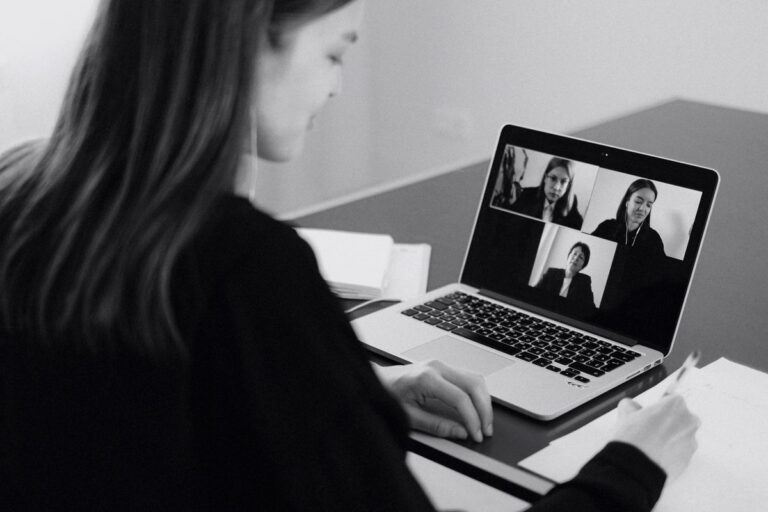
The growth of virtual and hybrid formats has added a new dimension to trade show video strategy. In a fully virtual environment, video is not a supporting asset. It is the primary medium. Your booth, your demonstrations, your conversations, all of it is mediated through a screen. The production standards and strategic thinking required are substantially higher than for an in-person show.
The shift to virtual formats also changes what good looks like. In-person trade show video is often rough and immediate by design. Virtual trade show video needs to be more polished because it is competing directly with every other piece of video content on the internet. A shaky phone clip that works as live social content from an in-person show will not hold attention in a virtual environment where the viewer has 50 other tabs open.
If you are exhibiting at B2B virtual events, your video production standards need to reflect that context. Lighting, audio, framing, and pacing all matter more when the screen is the only thing between you and your prospect. It is also worth looking at what strong virtual trade show booth examples do with video, because the best ones use it to create genuine engagement rather than just filling screen real estate.
One underrated tactic in virtual environments is virtual event gamification, which can be combined with video content to drive engagement in ways that passive viewing never achieves. A video-based quiz, a challenge built around a product demonstration clip, or a scavenger hunt that requires watching specific content can turn a passive audience into an active one.
Distributing Trade Show Video After the Event
Capturing good video at a trade show is only half the job. The other half is distribution, and it is where most of the value is either realised or lost.
The post-show window is short. Prospects you met at the show are still thinking about the conversations they had. Your brand is fresh in their minds. That is the moment to follow up with relevant video content, not three weeks later when the show has faded from memory. Your sales team should have access to relevant clips within days of the show closing, not weeks.
Platform selection matters here. A customer testimonial sent via personalised video message to a warm prospect performs very differently from the same clip posted on LinkedIn. The channel shapes the context, and the context shapes the response. Vidyard’s buyer’s guide to B2B video messaging platforms is a useful reference if you are thinking about how to equip your sales team to use video in post-show follow-up.
The longer tail of trade show video is equally important. A strong customer testimonial filmed in February should still be working in October. An expert interview that captures a genuinely useful perspective on your category has a shelf life measured in years, not weeks. The exhibitors who get the most from their trade show video investment treat it as a content library, not a one-off campaign asset.
Choosing the right platform for hosting and distributing that library is a separate decision from choosing the right platform for live social content. Our guide to choosing video marketing platforms covers the trade-offs in detail, but the short version is: optimise for the use case, not the platform with the most features.
Early in my agency career, I worked with a client who had invested heavily in trade show video for three consecutive years. They had excellent footage, well-filmed testimonials, strong product demos. Almost none of it was being used six months after each show. It was sitting in a Dropbox folder that nobody had organised. The problem was not the content. It was the absence of a distribution system. We built a simple internal video library, tagged by buyer stage and product line, and their sales team started using the content consistently for the first time. The content had not changed. The system had.
If you want to go deeper on the strategic side of video marketing across channels and formats, the video marketing hub covers everything from production planning to platform strategy to measurement. Trade show video is one application of a broader discipline, and the principles transfer across contexts.
About the Author
Keith Lacy is a marketing strategist and former agency CEO with 20+ years of experience across agency leadership, performance marketing, and commercial strategy. He writes The Marketing Juice to cut through the noise and share what works.