Organisational Change: Why Most Leaders Get It Backwards
Leading organisational change is less about having the right plan and more about understanding why people resist it. Most change programmes fail not because the strategy was wrong, but because the people running them underestimated how much the existing culture would push back, and overestimated how much a compelling presentation would overcome that resistance.
If you are a senior marketer or commercial leader tasked with driving change, the frameworks matter far less than your ability to read the room, hold your nerve, and keep moving when the organisation quietly starts working against you.
Key Takeaways
- Most change programmes fail at the cultural layer, not the strategic one. The plan is rarely the problem.
- Visible momentum in the first 90 days matters more than a perfect rollout. Early wins build the credibility that carries later, harder changes.
- Relative performance is the honest measure of change success. Growing while your market shrinks is not progress.
- Middle management is where change goes to die. Winning the executive layer and ignoring the middle is a common and costly mistake.
- Change leadership requires a tolerance for ambiguity that most organisations systematically train out of their people.
In This Article
- Why Change Programmes Fail Before They Start
- The First 90 Days Are Not About Strategy. They Are About Credibility.
- Middle Management Is Where Change Goes to Die
- Relative Performance Is the Only Honest Measure
- The Role of Marketing in Organisational Change
- Pace and Tolerance for Ambiguity
- When the Change Is the Strategy, Not Just the Vehicle for It
- What Actually Sustains Change Over Time
Why Change Programmes Fail Before They Start
The first thing most organisations do when they decide to change is commission a strategy document. The second thing they do is present it at an all-hands meeting with a lot of slides and a lot of enthusiasm. The third thing they do is wonder why, six months later, nothing has actually changed.
The problem is not the strategy. The problem is that change is presented as a rational exercise when it is fundamentally an emotional one. People do not resist change because they have read the business case and disagree with the logic. They resist it because change threatens their status, their competence, their relationships, and their sense of identity at work. No slide deck addresses any of that.
I have seen this play out more times than I can count across agency environments and corporate clients. A new CEO arrives with a turnaround mandate. The first 60 days are spent building a transformation plan. The plan is genuinely good. The communication is clear. And then the organisation, almost organically, begins to absorb it. Not reject it outright. Just absorb it. Slow it down. Dilute it. Until the urgency is gone and the plan looks like everything that came before it.
BCG’s work on commercial transformation captures something important here: the organisations that successfully change are the ones that treat it as a sustained operating model shift, not a project with a start and end date. Most organisations do the opposite.
The First 90 Days Are Not About Strategy. They Are About Credibility.
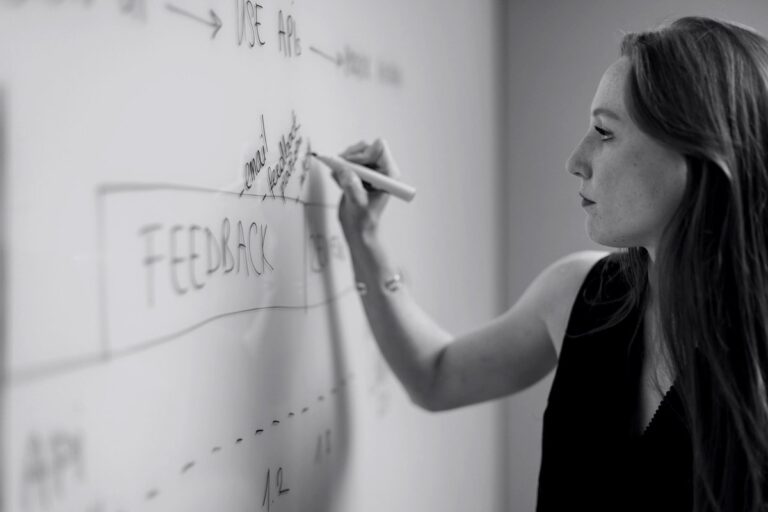
When I joined Cybercom as a relatively new face in an established agency, there was a Guinness brainstorm on the first week. The founder had to step out for a client meeting and handed me the whiteboard pen without ceremony. The room went quiet. I felt the weight of it. That moment was not about whether I had the right ideas. It was about whether I had the confidence to stand in front of a group of people who had not yet decided to trust me and lead something anyway. I did it. It was uncomfortable. And it set a tone that mattered far more than any strategy document I could have written.
The first 90 days of any change programme work the same way. People are watching to see whether the leader means it. They are not reading the plan. They are watching the behaviour. Do the senior leaders actually behave differently? Do the decisions being made reflect the stated priorities? Is anyone being held accountable for anything? If the answer to those questions is no, the change is already over, even if no one has said so out loud.
Early wins matter disproportionately here. Not because they prove the strategy works, but because they signal that something real is happening. Pick something visible, something that can be delivered in 60 to 90 days, and deliver it. Not as a PR exercise, but as a demonstration that the organisation is capable of moving.
If you are thinking about how change leadership fits into your broader commercial strategy, the Go-To-Market and Growth Strategy hub covers the wider context of how organisations align their people, structure, and go-to-market approach to drive sustainable growth.
Middle Management Is Where Change Goes to Die
One of the most consistent patterns I have seen in change programmes is that leadership gets the executive layer aligned, communicates well to the frontline, and completely underestimates the middle. Middle managers are the translation layer between strategy and execution. If they do not believe in the change, or if they feel threatened by it, they will not block it openly. They will just fail to carry it forward.
This is not cynicism. It is rational behaviour. Middle managers are often the people most invested in the existing way of doing things. They built their careers on it. A transformation that repositions the business or changes how teams are structured can feel, to them, like a direct challenge to everything they have earned. If you do not address that directly, you lose them, and when you lose them, you lose the change.
The practical implication is that change programmes need to spend as much time on middle management engagement as they do on executive alignment. That means involving them early, giving them genuine agency in shaping how the change is implemented in their areas, and being honest about what the change means for their roles. Pretending it does not affect them is not kindness. It is a delay of the inevitable and it destroys trust.
Forrester’s research on agile scaling journeys makes a related point: the organisations that struggle most with transformation are those where the operating model changes at the top but the management layer is left to interpret what that means for them without guidance. The gap between intent and execution is almost always a management layer problem.
Relative Performance Is the Only Honest Measure
One of the most dangerous traps in any change programme is measuring success against internal targets rather than external benchmarks. If the business grew by 10% this year, that looks like progress. But if the market grew by 20%, the business actually lost ground. The change programme delivered growth and still failed. The organisation just does not know it yet.
I have sat in board meetings where this exact dynamic played out. Revenue was up. Headcount was up. The change programme was declared a success. And then, quietly, over the following 18 months, the competitive position eroded because the organisation had been measuring itself against its own past rather than against the market it was operating in. By the time the problem was visible, the window to address it had narrowed significantly.
This is why change leadership requires a level of intellectual honesty that is genuinely difficult to sustain inside an organisation. The incentive structures push toward optimism. The culture rewards hitting targets. The people doing the measuring are often the same people who designed the targets. None of that creates the conditions for honest assessment.
The discipline is to set benchmarks that include market context from the start. Not just “we will grow revenue by 15%” but “we will grow revenue by 15% in a market that is projected to grow by 8%.” That framing changes the conversation completely. It also makes it much harder to declare premature victory.
The Role of Marketing in Organisational Change
Marketing leaders are often brought into change programmes as communicators rather than architects. The assumption is that marketing’s job is to package the change and sell it internally and externally. That is a significant underuse of what a commercially grounded marketing function can contribute.
Marketing leaders who have managed large budgets across multiple markets have a particular kind of commercial literacy that is genuinely useful in change contexts. They understand how to read audience behaviour, how to test and iterate, and how to measure what matters rather than what is easy to measure. Those capabilities are not just relevant to external campaigns. They are directly applicable to the challenge of driving internal change.
When I was growing a performance marketing agency from around 20 people to over 100, the change was not just structural. It was cultural. The business that existed at 20 people operated on instinct and relationships. The business that needed to exist at 100 people required process, accountability, and a shared operating model. Bridging that gap required the same skills as any major campaign: understanding the audience, identifying the barriers to adoption, testing different approaches, and measuring what was actually changing rather than what we hoped was changing.
The BCG perspective on evolving go-to-market models is useful here: the organisations that adapt most effectively are those where commercial and marketing functions are genuinely integrated into the change architecture, not just brought in to communicate decisions that have already been made.
Pace and Tolerance for Ambiguity
One of the things that distinguishes effective change leaders from ineffective ones is their tolerance for the period when things are neither the old way nor the new way. That transitional state is genuinely uncomfortable. Processes do not quite work. Roles are not entirely clear. The old ways of doing things have been disrupted but the new ways have not yet bedded in. Most organisations try to compress this period as much as possible, or pretend it is not happening. Both approaches make it worse.
The transitional state is where the real learning happens. It is where you discover which parts of the old model were actually load-bearing, which assumptions about the new model were wrong, and which people in the organisation are genuinely capable of operating in conditions of uncertainty. Rushing through it means missing all of that.
This does not mean moving slowly. It means moving deliberately. There is a difference between pace that is intentional and pace that is anxious. Anxious pace tends to create more disruption than it resolves because it forces decisions before there is enough information to make them well. Intentional pace creates momentum while preserving the space to course-correct.
Tools that help teams track performance during periods of change are genuinely useful here. Semrush’s overview of growth tools touches on this in a digital context, but the underlying principle applies more broadly: when you are changing how you operate, you need better visibility into what is actually happening, not less. The instinct to reduce measurement during change is understandable but counterproductive.
When the Change Is the Strategy, Not Just the Vehicle for It
There is a category of organisational change where the change itself is the competitive move. Not a restructure to deliver an existing strategy more efficiently, but a fundamental repositioning of what the organisation is and how it competes. This is harder, riskier, and more important than operational change, and it requires a different kind of leadership.
The failure mode here is treating strategic transformation as if it were operational change, just with bigger slides. Strategic transformation requires the organisation to genuinely let go of something it is currently good at in order to build something it is not yet good at. That is a different psychological challenge entirely. It asks people to accept a period of being worse at their jobs in service of a future state they cannot yet see clearly.
I have judged the Effie Awards, which means I have seen behind the curtain of what actually drives marketing effectiveness at scale. One of the consistent patterns in the most effective work is that it came from organisations that had made a clear strategic choice about what they were and were not. The clarity of the positioning drove the clarity of the work. The organisations that were still in the middle of figuring out what they were produced work that reflected that uncertainty, even when it was technically accomplished.
Strategic change requires that level of clarity before the organisation can execute against it. You cannot build effective go-to-market programmes, strong creative work, or coherent customer experience on an ambiguous strategic foundation. Getting the foundation right is not a delay to the real work. It is the real work.
Understanding how growth strategy connects to organisational design is something the Go-To-Market and Growth Strategy hub covers across a range of commercial contexts, from early-stage positioning to mature market transformation.
What Actually Sustains Change Over Time
Change that is not embedded in the operating model does not last. This is one of the most reliably true things I know about organisational transformation. The change that gets announced, celebrated, and then quietly abandoned is almost always the change that was never connected to how the organisation actually made decisions, allocated resources, and rewarded performance.
Sustaining change requires three things working together. First, the incentive structures need to reinforce the new behaviours, not the old ones. If you are asking people to collaborate across silos but rewarding individual performance, the incentives win every time. Second, the processes need to reflect the new operating model. If you have changed the strategy but the planning cycle, the budget process, and the reporting structure all reflect the old model, the old model is still running the business. Third, the leadership behaviour needs to be consistent over time. Change programmes that are driven by a single leader’s energy tend to stall when that leader moves on or gets distracted by something else.
The organisations I have seen sustain meaningful change are the ones that treated it as an ongoing operating discipline rather than a programme with a completion date. They kept measuring relative performance. They kept adjusting. They built the capacity for change into the organisation rather than treating it as an exceptional event.
That is a harder thing to build than a transformation plan. But it is the thing that actually matters.
About the Author
Keith Lacy is a marketing strategist and former agency CEO with 20+ years of experience across agency leadership, performance marketing, and commercial strategy. He writes The Marketing Juice to cut through the noise and share what works.