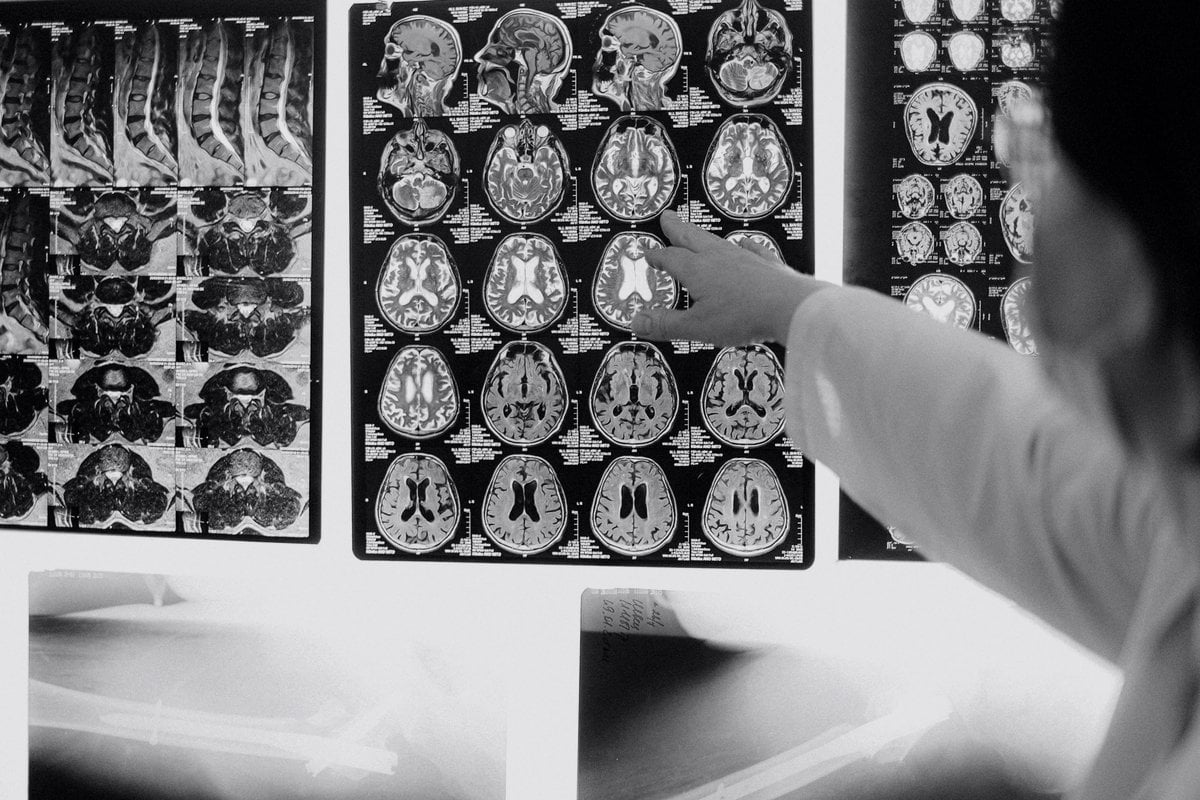
Neuromarketing Examples That Changed How Brands Sell
Neuromarketing applies findings from neuroscience and behavioural psychology to understand why people buy, not just what they say they will buy. The examples that matter most are not laboratory curiosities. They are decisions about colour, price presentation, sound, and sequence that have measurably shifted commercial outcomes for brands operating at scale.
What makes neuromarketing useful in practice is not the science itself, it is the discipline it forces on marketers. You stop asking “does this look good?” and start asking “what is this doing to the person seeing it?”
Key Takeaways
- Neuromarketing works because it studies behaviour, not stated preference. What people say they will do and what they actually do are frequently different things.
- Price anchoring, loss framing, and the decoy effect are among the most commercially proven neuromarketing techniques in active use by major brands.
- Sensory branding, including sound logos and scent, creates memory encoding that visual advertising alone cannot replicate.
- The sequence in which information is presented changes how it is evaluated. Order is not neutral.
- Most neuromarketing applications do not require a neuroscience budget. They require a clearer understanding of how decisions are actually made.
In This Article
- Why Neuromarketing Is More Useful Than Most Marketers Admit
- Price Anchoring: The Number That Changes Everything Around It
- The Decoy Effect: How a Third Option Changes the Choice Between Two
- Loss Framing: Why “Don’t Miss Out” Outperforms “consider this You Get”
- Sensory Branding: Sound, Scent, and Memory Encoding
- The Pratfall Effect: Why Imperfection Increases Trust
- Visual Hierarchy and the F-Pattern: How Eyes Actually Read a Page
- Social Proof at the Neural Level: Why We Follow What Others Do
- Colour Psychology: Real Effects, Overstated Claims
- Emotional Encoding: Why Feeling Precedes Thinking in Purchase Decisions
- The Practical Takeaway: What Neuromarketing Actually Asks of Marketers
Why Neuromarketing Is More Useful Than Most Marketers Admit
There is a version of neuromarketing that lives in conference keynotes and gets filed under “interesting but impractical.” Brain scanning. Biometric rigs. Eye-tracking labs. All of it real, some of it genuinely useful, but rarely what shapes the decisions that move a business.
The more commercially relevant version of neuromarketing is quieter. It is the understanding that people do not process information rationally, sequentially, or consciously, and that marketing which ignores this is working against itself. I have sat in enough creative reviews to know that most briefs are written as if the audience will read every word, weigh every claim, and make a considered decision. They will not. The brain takes shortcuts. Neuromarketing is, at its core, a study of those shortcuts.
If you want to go deeper on how psychology shapes purchasing decisions across channels, the Persuasion and Buyer Psychology hub covers the broader landscape, from cognitive bias to emotional triggers to the mechanics of social proof.
Price Anchoring: The Number That Changes Everything Around It
One of the most replicated findings in behavioural economics is that the first number a person sees shapes how they evaluate every number that follows. This is price anchoring, and it is used deliberately by almost every major retailer, subscription service, and SaaS platform on the planet.
The mechanism is straightforward. When you see a product originally priced at £199, now available for £89, the £199 is doing most of the work. It sets a reference point. The £89 is evaluated relative to that anchor, not on its own merits. Remove the original price and the £89 feels different, even if nothing about the product has changed.
Apple uses this consistently in product launches. When the iPhone is introduced alongside its pricing, the highest-tier model is always presented first. By the time the mid-range option appears, it feels like a reasonable compromise rather than an expensive purchase. The sequence is not accidental.
I have seen this applied on the agency side with surprisingly little sophistication. Clients would agonise over the “right” price point without considering what sat around it. A £500 service feels expensive in isolation. Positioned next to a £1,200 alternative, it feels considered and accessible. The product did not change. The frame did.
The Decoy Effect: How a Third Option Changes the Choice Between Two
The decoy effect is one of the most elegant examples of how irrational pricing decisions actually are. When a brand introduces a third option that is clearly inferior to one of two existing options, it shifts preference toward the option it is closest to, without being as good as it.
The classic demonstration involves cinema popcorn. Small at £3, large at £7. Most people buy small. Add a medium at £6.50 and suddenly the large looks like better value. The medium is the decoy. Its job is not to sell. Its job is to make the large look rational.
The Economist famously ran a subscription experiment that became a textbook case. Print-only at one price, digital-only at a lower price, and print-plus-digital at the same price as print-only. The combined option, priced identically to print-only, existed to make print-only look absurd and push subscribers toward the bundle. When the decoy was removed, digital-only subscriptions increased significantly. The decoy had been doing structural work that was invisible until it was gone.
This is worth understanding because it reveals something important about how people actually make decisions: not by evaluating options independently, but by comparing them to whatever else is in the frame. Change the frame and you change the decision.
Loss Framing: Why “Don’t Miss Out” Outperforms “consider this You Get”
Loss aversion is one of the most strong findings in behavioural science. The pain of losing something is felt more acutely than the pleasure of gaining something of equivalent value. Marketing that understands this frames its proposition around what the customer stands to lose, not what they stand to gain.
Insurance advertising has always known this intuitively, even before anyone called it neuromarketing. The proposition is not “buy this and feel secure.” It is “without this, here is what happens to you.” The threat is the product.
But loss framing extends well beyond insurance. Subscription services that emphasise what you lose when you cancel, rather than what you gain when you subscribe, are applying the same principle. Retailers that show stock levels dropping are making the same calculation. The underlying mechanism is identical: people are more motivated by the prospect of losing something they could have than by the prospect of gaining something they do not yet have.
What matters for marketers is the specificity of the loss. Vague loss framing (“don’t miss out”) is weaker than concrete loss framing (“your competitors are already using this”). The brain responds to vivid, proximate threats more than abstract ones. This is why urgency works better when it is grounded in something real, not manufactured scarcity that the audience can see through.
Sensory Branding: Sound, Scent, and Memory Encoding
Most marketing is visual. Most memory encoding is not. The brain encodes experience across multiple sensory channels, and brands that activate more than one channel create stronger, more durable memory structures than those relying on sight alone.
Sound logos are the most commercially scaled example of this. The Intel chime. The McDonald’s “ba da ba ba baa.” The Netflix ta-dum. These are not jingles in the traditional sense. They are sonic signatures engineered to trigger brand recognition faster than any visual asset can. The brain processes audio and associates it with memory and emotion through pathways that operate below conscious awareness. A well-constructed sound logo can achieve recognition in under two seconds.
Scent is less scalable but arguably more powerful in physical retail environments. Singapore Airlines has a patented scent called Stefan Floridian Waters, used across cabins, hot towels, and staff uniforms. The goal is consistent sensory association: the smell becomes the brand, and the brand becomes the smell. Abercrombie and Fitch used heavy in-store fragrance as a deliberate strategy to create a sensory environment that was distinctive enough to be polarising, which itself became a form of brand positioning.
The lesson is not that every brand needs a scent strategy. It is that sensory consistency across touchpoints creates stronger memory encoding than any single channel working in isolation. Most brands have not thought carefully about what they sound like, let alone what they smell like. That is a gap worth examining.
The Pratfall Effect: Why Imperfection Increases Trust
Counterintuitively, brands and individuals that acknowledge their flaws are often perceived as more trustworthy than those that present a flawless front. This is the pratfall effect, and it has direct implications for how brands build credibility.
The mechanism is rooted in authenticity signalling. A brand that admits a limitation is implicitly communicating that it is not trying to deceive you, which makes everything else it says more believable. A brand that claims to be perfect at everything triggers scepticism, because the audience knows nothing is perfect at everything.
Volkswagen’s “Think Small” campaign from the 1960s is the most cited example. At a time when American car advertising was obsessed with size, power, and status, Volkswagen ran ads that called its car ugly, small, and modest. The honesty was disarming. It made the brand feel trustworthy in a category that was not known for it.
More recently, brands like Patagonia have built significant loyalty by being openly critical of consumerism, including their own products. “Don’t buy this jacket” as an advertising headline is a pratfall effect applied at scale. It works because it is credible in a way that conventional advertising is not.
For most brands, the application is simpler. Acknowledging a trade-off (“we are not the cheapest, but here is why that matters”) is more persuasive than claiming to be the best at everything. Trust signals are built through specificity and honesty, not through superlatives. Customers have become sophisticated enough to discount claims that feel too clean.
Visual Hierarchy and the F-Pattern: How Eyes Actually Read a Page
Eye-tracking research has consistently shown that people do not read web pages and print layouts the way designers assume they do. The dominant pattern for text-heavy pages follows an F-shape: a horizontal scan across the top, a shorter horizontal scan further down, and then a vertical scan down the left side. Most of the right side of a page is rarely read at all.
This has direct implications for where you place your most important information. If your key value proposition is buried in the middle of a paragraph on the right side of a layout, a significant proportion of your audience will never see it, not because they lack interest, but because of how the brain allocates attention.
The same principle applies to visual hierarchy more broadly. The eye moves toward contrast, toward faces, toward movement, and toward the largest element on a page. These are not preferences. They are defaults built into how the visual cortex processes information. Design that works with these defaults is more effective than design that ignores them, regardless of how aesthetically pleasing the result is.
I spent years in agency environments where creative decisions were made on the basis of what looked good in a presentation. The work that won awards was not always the work that performed. There is a meaningful difference between creative that impresses in a boardroom and creative that works in the wild, where attention is scarce, context is noisy, and the audience has no obligation to engage.
Social Proof at the Neural Level: Why We Follow What Others Do
Social proof is one of the most discussed concepts in marketing psychology, but its neuromarketing dimension is less often examined. The tendency to use other people’s behaviour as a guide for our own is not a rational decision-making strategy. It is a deep evolutionary default. In conditions of uncertainty, what others are doing is genuinely informative. The brain treats social consensus as a signal of safety.
This is why social proof in conversion contexts works beyond simple reassurance. Seeing that thousands of other people have made the same choice reduces the cognitive effort required to make that choice yourself. The decision has, in effect, already been validated. The brain does not need to work as hard.
The neuromarketing implication is about specificity and proximity. “Trusted by thousands of customers” is weaker than “4,847 businesses in the UK use this.” The specific number activates a different cognitive process than the vague claim. It feels real rather than constructed. Similarly, social proof from people who resemble the audience is more neurologically activating than proof from distant or abstract sources. The brain is looking for people like me doing this, not just people in general.
Understanding how social proof functions across different contexts helps brands deploy it more precisely, rather than scattering testimonials across a page and hoping for the best. Placement, specificity, and source credibility all affect how the brain processes and responds to social validation signals.
Colour Psychology: Real Effects, Overstated Claims
Colour psychology is one of the most misrepresented areas in marketing. The claim that red always increases urgency, or that blue always builds trust, is too simplistic to be useful. Colour effects are real, but they are highly context-dependent, culturally variable, and moderated by what surrounds them.
What the evidence does support is that colour consistency builds brand recognition over time. The specific Tiffany blue, the Cadbury purple, the Hermès orange: these work not because of any inherent psychological property of the colour, but because of the associations built through years of consistent use. The colour becomes a memory cue. It shortcuts recognition before any other brand signal has been processed.
Contrast is more reliably useful than colour choice in isolation. A call-to-action button that contrasts strongly with its background will be noticed more than one that blends in, regardless of what colour it is. The brain’s visual system is wired to detect contrast and movement. This is a more actionable insight than “use red to create urgency.”
The broader point is that neuromarketing is most useful when it makes specific, testable predictions rather than offering sweeping rules. Anyone selling you a universal colour code for consumer behaviour is selling you something that does not exist. Cognitive biases are real and consistent, but their expression varies with context. Good neuromarketing thinking acknowledges that.
Emotional Encoding: Why Feeling Precedes Thinking in Purchase Decisions
The brain’s emotional processing system responds faster than its rational processing system. This is not a metaphor. The amygdala, which handles emotional responses, receives and processes sensory information before the prefrontal cortex, which handles rational evaluation, has finished its work. Emotion is not a layer on top of decision-making. It is structurally prior to it.
For marketing, this means that how something feels to encounter is more important than what it says, at least in the first moment of contact. An ad that creates a feeling of warmth, excitement, or belonging before it has communicated a single rational claim is doing something that a list of product features cannot replicate.
This is why emotional marketing in B2B contexts is more effective than many B2B marketers assume. The idea that business buyers are purely rational is a fiction. Business buyers are human beings making decisions under uncertainty, with career risk attached to those decisions. Emotion is present in every purchasing context. The question is whether your marketing is engaging it or ignoring it.
I have judged the Effie Awards, which are specifically designed to measure marketing effectiveness rather than creative quality. The work that consistently performs across categories is not the most visually impressive or the most technically sophisticated. It is the work that creates a genuine emotional connection before it asks for anything. That pattern holds across B2C and B2B, across sectors, and across markets. Emotion encodes memory. Memory drives preference. Preference drives purchase.
The Vodafone Christmas campaign I worked on years ago is a useful illustration of this. We built the entire creative strategy around emotional resonance, a piece of music that was perfectly calibrated to the feeling we wanted to create. When a music licensing issue forced us to abandon the campaign entirely at the eleventh hour, the replacement concept we developed under significant time pressure had to work harder rationally because we had less time to engineer the emotional architecture. It performed, but it never quite had the depth of the original. The emotional layer is not decoration. It is load-bearing.
Understanding why emotion precedes rational evaluation is one part of a broader picture. The Persuasion and Buyer Psychology hub covers the full range of mechanisms that shape how people make decisions, from the role of cognitive shortcuts to the structural conditions that make persuasion more or less likely to work.
The Practical Takeaway: What Neuromarketing Actually Asks of Marketers
The most useful thing neuromarketing does is shift the question. Instead of “is this good marketing?” it asks “what is this doing to the person experiencing it?” That is a more demanding question, and a more productive one.
It does not require a neuroscience budget. It requires a clearer model of how decisions are actually made, as opposed to how we would like them to be made. It requires honest evaluation of whether your creative is working with human psychology or against it. And it requires the discipline to test, measure, and revise based on behaviour rather than opinion.
The brands that apply neuromarketing most effectively are not the ones running the most sophisticated experiments. They are the ones that have internalised a basic truth: people do not experience your marketing the way you intend it. They experience it in fragments, under distraction, with existing associations and emotional states you did not choose. Designing for that reality, rather than for the idealised attention of a focus group, is what separates marketing that works from marketing that merely exists.
Fix how you think about the audience’s decision-making process, and most of your marketing decisions become clearer. That is not a neuromarketing insight specifically. It is a measurement and honesty problem. But neuromarketing gives you better tools to diagnose where the gap between intention and effect actually lies.
About the Author
Keith Lacy is a marketing strategist and former agency CEO with 20+ years of experience across agency leadership, performance marketing, and commercial strategy. He writes The Marketing Juice to cut through the noise and share what works.