PLG vs SLG: Which Go-To-Market Motion Fits Your Business?
PLG (product-led growth) and SLG (sales-led growth) are two fundamentally different go-to-market motions. PLG lets the product do the selling, using free trials, freemium tiers, and in-product activation to convert users into paying customers. SLG puts human sales effort at the centre, using outbound prospecting, demos, and relationship-building to move deals through a pipeline. Most businesses need to understand both before committing to either.
The choice is not purely philosophical. It shapes your hiring, your pricing architecture, your marketing investment, and your unit economics. Get it wrong and you spend two years building the wrong machine.
Key Takeaways
- PLG works when your product can demonstrate value quickly, without a salesperson explaining it. If it needs a 45-minute demo to make sense, PLG is the wrong motion.
- SLG remains the dominant model for complex, high-ACV deals where buying committees, procurement processes, and risk management make self-serve impractical.
- The hybrid model (product-led sales) is gaining ground, but it requires tight alignment between product, marketing, and sales, and most teams underestimate that operational cost.
- Your go-to-market motion should follow your buyer’s natural behaviour, not the motion your competitors use or the one that sounds most modern.
- Most PLG failures are not product failures. They are positioning and onboarding failures, where the product never gets the chance to prove its value before the user leaves.
In This Article
- What Is Product-Led Growth and Why Has It Dominated the Conversation?
- What Is Sales-Led Growth and Is It Really Under Threat?
- How Do You Choose Between PLG and SLG?
- What Is Product-Led Sales and Does the Hybrid Model Work?
- Where Does PLG Actually Fail?
- What Do Enterprise Buyers Actually Need from a GTM Motion?
- How Should Marketing Teams Think About Their Role in Each Motion?
- Which Motion Is Right for Your Stage of Growth?
What Is Product-Led Growth and Why Has It Dominated the Conversation?
PLG became the dominant GTM narrative of the 2010s for a simple reason: it worked spectacularly for a handful of companies, and the industry did what it always does, which is generalise from exceptional cases and treat them as universal rules.
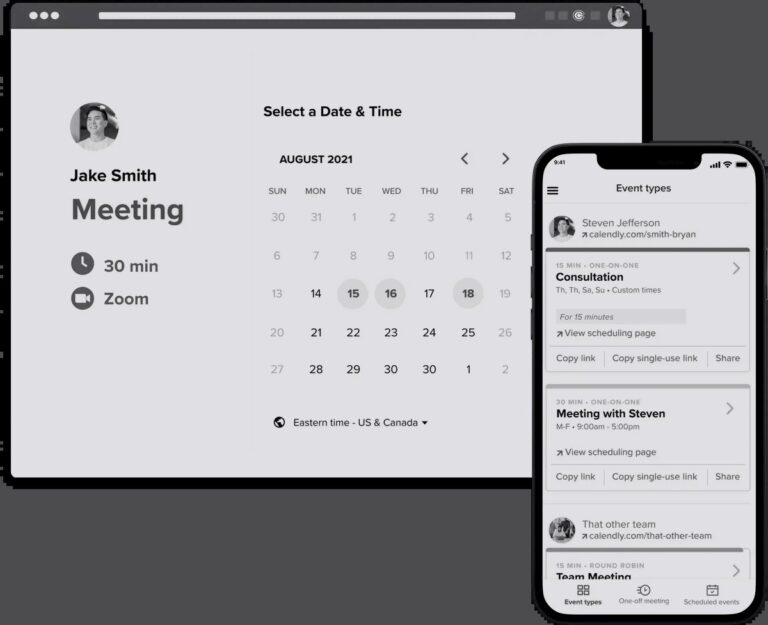
Slack, Dropbox, Figma, Notion, Calendly. The PLG hall of fame is well-documented. Users discovered the product, found immediate value, invited colleagues, and the product spread virally through organisations before a single salesperson made a call. The economics looked extraordinary: low customer acquisition cost, high net revenue retention, compounding word-of-mouth. Investors loved it. Founders copied it.
What got lost in the retelling is how specific the conditions were. These products had near-instant time-to-value. They solved a problem that users felt personally, not just organisationally. They had natural collaboration mechanics that made sharing the product the rational next step. And they operated in markets where the individual user had meaningful purchase authority, or at least meaningful influence.
Remove any one of those conditions and the PLG playbook starts to break down. I have seen this play out in practice. Early in my career, I over-indexed on lower-funnel performance, convinced that capturing existing intent was the same as driving growth. It is not. PLG has a version of the same trap: it optimises for converting people who are already in the funnel, already motivated, already close to a decision. That is valuable, but it is not the whole growth picture. Reaching new audiences, people who do not yet know they need your product, requires a different kind of effort entirely.
If you want a broader view of how PLG fits within a full go-to-market and growth strategy, the Go-To-Market and Growth Strategy hub covers the wider context, from market entry to scaling decisions.
What Is Sales-Led Growth and Is It Really Under Threat?
SLG is not dying. It is evolving, and there is a meaningful difference between those two things.
Sales-led growth means that human sales effort is the primary mechanism for acquiring and expanding revenue. A salesperson identifies a prospect, qualifies them, runs a discovery process, presents a solution, handles objections, and closes a deal. The product may support that process, demos and trials may feature in it, but the relationship and the conversation are doing the work.
For enterprise software, professional services, complex infrastructure, and anything requiring significant customisation or integration, this model remains dominant for structural reasons. Buying committees exist. Procurement processes exist. Legal review exists. Risk management exists. A freemium tier does not handle any of that. A skilled account executive does.
The Vidyard analysis of why GTM feels harder captures something real here: the buying environment has become more complex, with more stakeholders involved in decisions and longer sales cycles, which actually reinforces the case for skilled sales in high-ACV environments rather than undermining it.
I spent years working with clients across 30 industries, and the pattern I saw repeatedly was that companies with high average contract values and complex buying processes who tried to shift to PLG ended up with a two-tier problem. They had a free tier full of users who never converted, and an enterprise tier that still needed sales support but now had less of it because resources had been redirected toward product-led acquisition. The worst of both worlds.
How Do You Choose Between PLG and SLG?
The honest answer is that the choice should be driven by your buyer’s natural behaviour, not by what is fashionable or what your competitors are doing.
Ask four questions.
First: can your product deliver meaningful value within the first session, without explanation? Not a promise of value, not a demo of value, but actual experienced value. If a new user cannot feel the product working for them within minutes, PLG will struggle. Your activation funnel will leak at every stage and you will spend more on onboarding optimisation than you would have spent on sales.
Second: who holds the budget? If the person who benefits from your product is not the person who authorises the spend, PLG creates a gap. The user loves it. The finance director has never heard of it. Someone needs to bridge that gap, and in most organisations, that someone is a salesperson.
Third: what is your average contract value? PLG economics work when the cost of customer acquisition is low relative to the revenue per customer. At low ACV with high volume, that can work. At high ACV with low volume, the maths changes. A single enterprise deal closed by a skilled AE can be worth more than a year of PLG-driven self-serve conversions. The BCG work on long-tail pricing in B2B markets is useful context here, particularly on how pricing architecture interacts with go-to-market motion.
Fourth: does your product have natural virality or collaboration mechanics? Figma spreads because designers share files. Slack spreads because messaging requires other people. Calendly spreads because every booking link is a passive advertisement. If your product is used in isolation, the viral loop does not exist, and you are relying on PLG without the mechanism that makes PLG work.
What Is Product-Led Sales and Does the Hybrid Model Work?
Product-led sales (PLS) has emerged as the pragmatic middle ground, and in the right context, it is genuinely effective. The idea is straightforward: use product adoption signals to inform and prioritise sales effort. When a free user hits a usage threshold, invites multiple colleagues, or activates a high-value feature, that is a sales signal. A salesperson reaches out at the moment of maximum intent, armed with data about how the prospect is already using the product.
This is a real improvement on cold outbound. The prospect already has context. The salesperson has a reason to call that is not manufactured. The conversation can start from value rather than from scratch.
But PLS is operationally demanding in ways that are consistently underestimated. It requires clean product instrumentation. It requires agreement between product and sales on what constitutes a meaningful signal versus noise. It requires a sales team that can operate in a consultative mode rather than a transactional one. And it requires marketing to build enough awareness and top-of-funnel volume that the free tier has enough users to generate a meaningful pipeline.
I have seen PLS work well when those foundations are in place. I have also seen it become a very expensive way to generate a list of leads that sales ignores because the signal quality is poor and the handoff process is broken. The model is sound. The execution is hard.
Tools like Hotjar’s work on growth loops illustrate how product behaviour data can be structured to inform growth decisions, which is the analytical foundation PLS depends on.
Where Does PLG Actually Fail?
PLG failures tend to cluster around three problems, and none of them are primarily product problems.
The first is onboarding. Most products that fail at PLG do not fail because the product is bad. They fail because the onboarding experience does not get the user to the moment of value fast enough. The user signs up, looks around, does not immediately understand what to do, and leaves. The product never gets a fair hearing. This is a positioning and UX problem, not a product problem, but it kills PLG outcomes just as effectively.
The second is the wrong audience in the free tier. If your marketing is broad and your free tier is easy to enter, you will attract a lot of users who are curious but not qualified. They inflate your activation numbers, consume support resource, and never convert. The conversion rate looks poor, but the real problem is audience quality at the top of the funnel. I spent years watching performance marketing teams celebrate high click volumes while the actual customer quality was mediocre. PLG has the same trap, just further down the funnel.
The third is the freemium ceiling. If your free tier is too generous, there is no compelling reason to upgrade. If it is too restrictive, users never experience enough value to want more. Getting that balance right is a pricing and product strategy question, not a marketing question, but marketing teams often inherit the consequences of getting it wrong. The Semrush overview of growth examples includes cases where freemium ceiling design made or broke the PLG motion.
What Do Enterprise Buyers Actually Need from a GTM Motion?
Enterprise buying behaviour is different enough from SMB or individual buying that it warrants separate consideration. This is not a subtle distinction. It changes almost everything about how your GTM motion needs to work.
Enterprise buyers are managing risk as much as they are evaluating value. They need to know that the vendor will still be around in three years. They need to know that the product integrates with their existing stack. They need to know that security and compliance requirements are met. They need internal champions who can make the case to procurement and finance. None of this is solved by a great product experience. All of it requires human engagement.
Early in my agency career, I was handed a whiteboard pen in a brainstorm for a major brand when the founder had to leave for a meeting. The instinct was panic. The response had to be confidence, because the room needed someone to lead. Enterprise sales has a version of that dynamic. The buyer is in a room full of stakeholders with competing priorities. Your salesperson needs to be the calmest, clearest, most credible voice in that room. A freemium trial does not do that job.
The BCG work on go-to-market strategy in complex sectors reinforces this: in markets with long buying cycles, high stakes, and multiple decision-makers, the GTM motion has to be designed around the buyer’s process, not the seller’s preference for efficiency.
How Should Marketing Teams Think About Their Role in Each Motion?
In a PLG motion, marketing’s job is to drive qualified users into the product and to support in-product activation through content, email, and lifecycle programmes. The product is the conversion mechanism. Marketing fills the top and supports the middle.
In an SLG motion, marketing’s job is broader and more traditional: build awareness, generate pipeline, support sales enablement, and create the category context that makes the sales conversation easier. Marketing is not handing off to a product. It is handing off to a person, and that person needs tools, content, and credibility to close.
In a PLS motion, marketing sits at the intersection. It drives top-of-funnel volume for the free tier, supports in-product activation, and then works with sales on the conversion of product-qualified leads. The coordination requirement is significant. Marketing, product, and sales need to agree on definitions, metrics, and handoff processes. Without that alignment, PLS becomes three teams each optimising for their own metrics while the customer experience suffers.
I have run agencies where the account team, the strategy team, and the media team all had different views of what success looked like on the same client. The client always felt that misalignment before we did. GTM motion alignment has the same dynamic. The customer experiences the gaps between your teams before your internal reporting does.
The Crazy Egg breakdown of growth strategy fundamentals is worth reading for how growth-oriented teams structure their thinking across channels and motions, particularly for teams that are newer to formalising their GTM approach.
Which Motion Is Right for Your Stage of Growth?
Stage matters as much as product type. The right GTM motion at Series A may be the wrong one at Series C. The right motion for a single-product startup may be wrong for a multi-product platform.
Early-stage companies often default to SLG because founders can sell. They know the product, they know the market, and they can have the conversations that close deals. That is appropriate. The goal at that stage is learning, not scaling. Every sales conversation teaches you something about your buyer that a self-serve funnel cannot.
As you scale, the question becomes whether sales effort can be systematised or whether it needs to be replaced. If your product can be understood quickly and your buyers have authority to purchase, PLG or PLS may reduce your cost of acquisition significantly. If your deals are complex and your buyers are committees, adding more salespeople is still the right answer, even if it is a less fashionable one.
I grew an agency from 20 to 100 people over several years. At 20, we sold through relationships and reputation. At 100, we needed process, structure, and a more systematic approach to pipeline. The motion changed because the business changed. GTM strategy is not a one-time decision. It is a decision you revisit as your market position, product maturity, and competitive environment evolve.
For more on how growth strategy decisions compound over time and interact with market entry, positioning, and scaling choices, the full Go-To-Market and Growth Strategy section covers these topics in depth.
About the Author
Keith Lacy is a marketing strategist and former agency CEO with 20+ years of experience across agency leadership, performance marketing, and commercial strategy. He writes The Marketing Juice to cut through the noise and share what works.