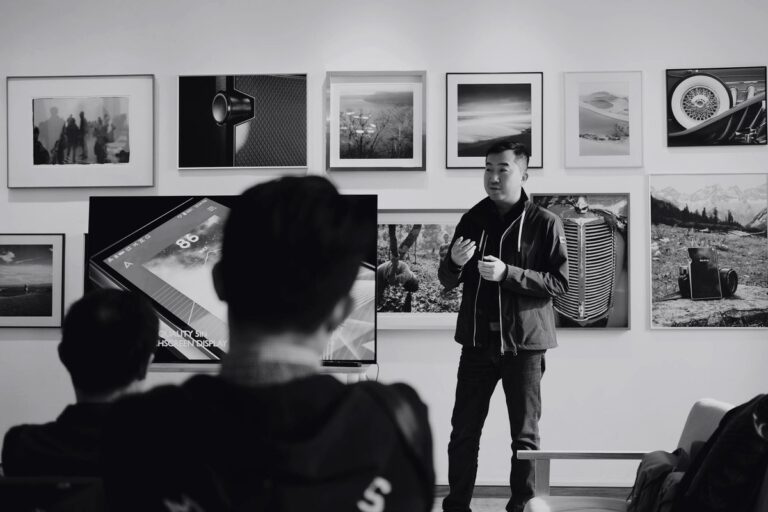
Tradeshow and Event Marketing: Stop Treating the Booth as the Strategy
Tradeshow and event marketing works when it is treated as a commercial channel, not a calendar commitment. Most companies show up, build a booth, collect badge scans, and call it a success. The ones generating real pipeline from events think differently: they treat every touchpoint, before, during, and after the floor, as part of a connected acquisition system.
The booth is not the strategy. It is one moment inside a much longer sequence. And if you have not designed that sequence deliberately, you are spending a significant budget to generate a spreadsheet of names that your sales team will ignore by Thursday.
Key Takeaways
- Events generate leads. Systems convert them. Most companies invest heavily in the first and almost nothing in the second.
- Video captured at events is one of the highest-leverage content assets a marketing team can produce, but only when it is planned before the event, not improvised on the floor.
- The physical booth experience and the digital follow-up sequence are not separate workstreams. They need to be designed together.
- Badge scans are a vanity metric. Qualified conversations, booked meetings, and pipeline created are the numbers that matter.
- Complexity in event marketing compounds fast. A tighter brief, a smaller footprint, and a clearer audience almost always outperform the maximalist approach.
In This Article
- Why Most Event Marketing Budgets Are Poorly Allocated
- The Pre-Event Window Is Where Pipeline Is Actually Built
- What Happens on the Floor and Why Most of It Does Not Convert
- Capturing Content at Events: The Asset Most Teams Leave Behind
- The Follow-Up Sequence: Where Most Event ROI Is Lost
- Virtual and Hybrid Events: What the Last Few Years Have Actually Taught Us
- Measuring Events Honestly
I have managed event marketing programmes across more than 30 industries. I have seen companies spend north of £500,000 on a single tradeshow stand and walk away with fewer qualified conversations than a competitor who spent a tenth of that on a well-placed meeting room and a sharp pre-show outreach sequence. The difference was never the budget. It was the thinking behind it.
Why Most Event Marketing Budgets Are Poorly Allocated
There is a pattern I have seen repeat itself across almost every sector. A company commits to an event in Q4 of the previous year. By the time the event arrives, the brief has expanded, the stand has grown, the production costs have ballooned, and the marketing team is exhausted before the doors open. The stand looks impressive. The hospitality is generous. And then the post-event review asks why pipeline is flat.
The problem is structural. Most event budgets are built around presence, not performance. The line items are physical: stand build, AV, logistics, hospitality, staffing. The commercial infrastructure, pre-event outreach, meeting scheduling, content capture, follow-up sequences, gets whatever is left. Which is usually not much.
Complexity in event marketing delivers diminishing returns faster than almost any other channel. A stand with seven interactive zones, a live DJ, and a barista bar is harder to staff, harder to brief, and harder to measure than a clean 6×6 space with a clear message and a well-trained team. I have run both. The simpler version generates better conversations, because visitors know what you do and why they should care before they even walk in.
If you are building your event presence from scratch, the physical booth design is one component of a larger system. There are some genuinely useful trade show booth ideas that attract visitors worth exploring, but they only pay off when the surrounding strategy is in place. A clever booth idea inside a broken acquisition sequence is still a broken acquisition sequence.
The Pre-Event Window Is Where Pipeline Is Actually Built
Most of the commercial value from a tradeshow is determined before the event begins. The companies that consistently generate pipeline from events are running outreach campaigns four to six weeks out. They are identifying which of their target accounts are attending, personalising their outreach to those specific contacts, and booking meetings before the floor opens.
This is not a new idea. But it is consistently underexecuted, because it requires sales and marketing to work from the same list, with the same message, toward the same outcome. That alignment is harder than it sounds in most organisations.
Video plays a specific role here that is underused. A short, personalised video sent to a target contact two weeks before an event, referencing a shared challenge and suggesting a specific meeting time, performs significantly better than a standard email invitation. The research on video in outreach is consistent on this point. Video in marketing communications increases engagement and response rates across most B2B contexts, and pre-event outreach is one of the clearest applications of that principle.
The broader discipline of video in acquisition sits within a wider conversation about how video marketing works as a channel. If you are building out your event video strategy, the video marketing hub covers the full landscape, from platform selection to content planning to measurement.
What Happens on the Floor and Why Most of It Does Not Convert
The average tradeshow conversation lasts between three and seven minutes. In that window, a visitor is deciding whether you are relevant to their situation. If your team is leading with product features, you have already lost them. The conversations that convert lead with the problem the visitor is trying to solve.
This sounds obvious. It is consistently ignored. I have stood in client booths and listened to sales teams open with a product demo that has not been contextualised to the visitor’s industry, role, or situation. The visitor smiles politely, takes the branded pen, and moves on. The badge scan gets logged. The lead goes nowhere.
Booth staff briefing is one of the highest-leverage activities in event preparation and one of the most neglected. A two-hour briefing session that gives your team three qualifying questions, two clear conversation openers, and a simple handoff protocol for hot leads will outperform a £50,000 stand upgrade every time.
The physical environment still matters, but its job is to create the conditions for a good conversation, not to replace one. If you are thinking about what the booth experience should do, it is worth looking at how virtual trade show booth examples have approached the same challenge digitally. The best virtual booths strip away everything that does not serve the conversation. The same logic applies in person.
Capturing Content at Events: The Asset Most Teams Leave Behind
Every major event is a content production opportunity. Most marketing teams treat it as a distraction from the main job of working the floor. This is a significant missed opportunity, and it is one I made myself in the early years before I understood how much content value was being left on the table.
A single day at a well-attended tradeshow can yield: customer testimonials filmed in a quiet corner, panel session recordings, expert interviews with speakers, short-form social content captured in real time, and behind-the-scenes footage that humanises the brand. None of this requires a production crew. It requires a plan, a brief, and someone with a smartphone who knows what they are capturing and why.
The challenge is that most of this content is captured reactively, without a clear sense of where it will be used or what it needs to achieve. Aligning video content with marketing objectives before the event is the step that most teams skip, and it is the step that determines whether the footage becomes a useful asset or sits in a shared drive for eighteen months.
Before any event, I now insist on a simple content brief that answers four questions: What do we need to capture? Who is the audience for each piece? Where will it be published? And what does success look like for each asset? That brief takes an hour to write and saves weeks of post-event confusion.
Customer testimonials filmed at events are particularly valuable because the context is authentic. The customer is already in a frame of mind where they are thinking about their industry, their challenges, and the solutions they have found. Video content in marketing performs best when it is credible and specific, and a testimonial captured at an industry event carries both of those qualities naturally.
The Follow-Up Sequence: Where Most Event ROI Is Lost
The event ends. The team flies home exhausted. The badge scan list arrives in someone’s inbox on Wednesday. By Friday, half the leads have been imported into the CRM with no notes, no context, and no follow-up sequence triggered. This is where most event ROI disappears.
The follow-up sequence needs to be designed before the event, not after it. That means knowing in advance how leads will be categorised on the floor, what the first communication will say, when it will go, and who owns the follow-up for each tier. If that system does not exist before you arrive at the event, it will not exist in any useful form when you get home.
Video in follow-up sequences is one of the clearest performance improvements available to most B2B marketing teams. A short video from the team member who had the conversation, referencing something specific from the discussion, sent within 48 hours of the event closing, converts significantly better than a generic email. Wistia’s approach to using video for lead capture is a useful reference point for how video can be embedded into a follow-up workflow with proper tracking and engagement data.
The platform you use to distribute and track that follow-up video matters more than most teams realise. Different platforms handle analytics, gating, and embedding differently, and those differences affect how much you can learn from the engagement data. Choosing video marketing platforms with follow-up workflows in mind is a decision worth making before you are standing in a hotel room trying to edit footage on your laptop.
Virtual and Hybrid Events: What the Last Few Years Have Actually Taught Us
The industry spent a few years convinced that virtual events would replace physical ones. They did not. What emerged instead was a more nuanced picture: virtual and hybrid formats work well for specific objectives and specific audiences, and they fail badly when they are used as a cheaper substitute for an in-person experience rather than as a genuinely different format.
The mechanics of B2B virtual events are different enough from physical events that treating them as the same thing with a camera pointed at a screen is a reliable way to produce a poor experience. Virtual formats require more deliberate structure, shorter content blocks, and a much more active approach to driving participation. Passive attendance at a virtual event is almost universal. Active engagement requires design.
One of the more interesting developments in virtual event design is the use of game mechanics to drive participation. Virtual event gamification has moved from a novelty feature to a legitimate engagement tool in some sectors, particularly where the audience is younger or where the event format runs across multiple days and needs to sustain attention over time. The evidence on whether it drives commercial outcomes rather than just engagement metrics is still mixed, and I would treat any vendor claim about gamification ROI with appropriate scepticism until you have tested it against your own audience.
What the virtual event era did establish clearly is that content captured at events has a longer commercial life than most teams assume. A well-produced session recording, properly edited and distributed, can generate engagement and pipeline for months after the event closes. That changes the economics of event content investment significantly, and it is an argument for treating content capture as a primary objective rather than an afterthought.
HubSpot’s analysis of B2B and B2C video marketing trends consistently shows that video content from events, particularly customer stories and expert interviews, performs well in post-event nurture sequences. The format is trusted and the context is credible. If you are not systematically capturing and distributing that content, you are leaving a meaningful asset unused.
Measuring Events Honestly
Event measurement is one of the areas where marketing teams are most prone to false precision. The badge scan count, the social impressions, the website traffic spike during the event week: these are numbers that are easy to report and easy to misinterpret.
The question that matters is simpler and harder: did this event contribute to pipeline that closed? Answering that question requires a CRM that is properly maintained, a lead handoff process that works, and a willingness to wait long enough for the sales cycle to complete before drawing conclusions. Most event post-mortems happen two weeks after the event. Most B2B sales cycles are significantly longer than two weeks.
I have sat in post-event reviews where the marketing team presented a slide showing 847 leads generated and called the event a success. Six months later, when I asked how many of those leads had converted to pipeline, the answer was three. The event had not failed because of the lead count. It had failed because the leads were the wrong people, the follow-up was generic, and no one had defined what a qualified lead actually looked like before the event began.
Honest event measurement starts with honest event objectives. If you cannot articulate in one sentence what commercial outcome you are trying to produce, and how you will know whether you produced it, you are not ready to spend the budget. That sounds harsh. It is also the fastest way to improve event ROI I have ever found.
The same discipline applies to video content produced at events. Buffer’s research on video marketing performance is a useful reference for understanding how different video formats perform across different stages of the funnel. Event content tends to perform best in mid-funnel nurture, where the goal is building familiarity and trust rather than driving immediate conversion. Knowing that before you plan your content capture changes what you shoot and how you edit it.
There is a broader framework for thinking about how video builds commercial relationships over time, and Wistia’s work on brand affinity marketing is worth reading if you are trying to connect your event video strategy to longer-term acquisition goals. The argument that consistent, quality video content builds the kind of trust that shortens sales cycles is one that holds up in practice, particularly in complex B2B categories where buyers need to trust the people behind the product before they trust the product itself.
Event marketing is one of the most resource-intensive channels a marketing team runs. It deserves the same rigour in planning, execution, and measurement that you would apply to any other significant budget line. The video content you produce at events is part of that same discipline. If you are thinking about how video fits into your broader marketing strategy, the video marketing hub is a useful place to see how the different components connect.
About the Author
Keith Lacy is a marketing strategist and former agency CEO with 20+ years of experience across agency leadership, performance marketing, and commercial strategy. He writes The Marketing Juice to cut through the noise and share what works.